Showing posts with label University of Political Science and Law (政法大学). Show all posts

Sunday, May 31, 2015

People of 1989: Pu Zhiqiang (浦志强)

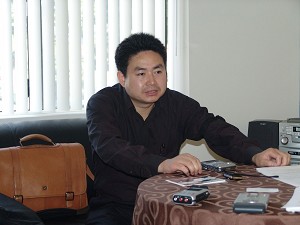
Born in 1965, Pu Zhiqiang graduated from Nankai University as a history major in 1986. By the year of 1989, he was a graduate student of law at the University of Political Sciences and Law.

The school, although small in size, was a major force throughout the 1989 student movement. As early as April 17, teachers and students from that school had launched the first march of the year. Pu Zhiqiang joined Chen Xiaoping and Wu Renhua in that march to lay a giant wreath at Tiananmen Square in memory of Hu Yaobang. On April 22, students marched into Tiananmen Square again to participate the funeral. Pu Zhiqiang was there. He was so overcome by emotion that he smashed his own head with a bullhorn, which caught the attention of Liu Gang. Liu Gang tried to talk Pu Zhiqiang into running for the leadership of Chinese Students Autonomous Federation, but Pu Zhiqiang declined out of modesty.

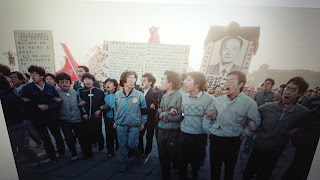
During the great demonstration of April 27, the lanky Pu Zhiqiang was at the front row of his university with the flag of his school. From then on, he could always been seen at the forefront of each demonstration.

Pu Zhiqiang in a bicycle rally calling for press freedom on May 10, 1989.

Pu Zhiqiang (center) leads the University of Political Sciences and Law contingent to hunger strike on May 13, 1989. 

Pu Zhiqiang in hunger strike, May 1989.
On the night of the massacre, Pu Zhiqiang was in Tiananmen Square throughout the ordeal and was among the last people withdrawn from there. He made a vow then and there that he would return on that day every year to commemorate the victims. For the more than twenty years since, he kept his promise, except for a couple of years when he was detained by police preventing him to do so.

Although an active participant of the movement, Pu Zhiqiang escaped serious punishment thanks to the actions of his school officials. He graduated with a masters degree in 1991 and obtained license to practice law in 1995. He gradually becomes a prominent civil rights lawyer, defending many dissidents against the government prosecution, including the famous case of Ai weiwei. He is also very active and daring in social media, often criticizing government's policy. His accounts were often blocked or deleted.

In February, 2013, the magazine Southern People Weekly published an issue with him being the cover figure. In the issue, he was quoted as saying, "I kept my principle. They didn't. The people in power today, they are more or less at my age. They had experienced the latter stage of the Cultural Revolution, the liberalization in the 1980s. But at some point of their lives, they gave up and perhaps could never keep their principles. Because they no longer have their grounds."


In May, 2014, Pu Zhiqiang participated in a private gathering commemorating the Tiananmen Massacre in Beijing. He was soon detained afterwards. A year later, on May 15, 2015, he was formally charged with "causing nationality hatred and disturbing peace."

On December 21, 2015, Pu Ziqiang was sentenced to 3 years of prison but spared of actually serving them, after he wrote a statement promising good behavior.

Hand-written statement by Pu Zhiqiang when he was in prison on December 20, 2015.


People of 1989
Saturday, May 30, 2015

Pictures of 1989, the Start of Hunger Strike on May 13, 1989

Students display posters for hunger strike.

Hunger strike posters in Peking University.

Hunger strikers from Peking University have their "last lunch" provided by their teachers.

Pu Zhiqiang (center) leads hunger strikers from University of Political Sciences and Law.

Wang Dan (left), Ma Shaofang( center), and Wuer Kaixi (right) are on their way to hunger strike.

Wuer Kaixi

Wuer Kaixi and hunger strikers.

Pictures of 1989

Sunday, May 10, 2015

Saturday, April 25, 2015

Pictures of 1989: BSAF's First Press Conference on April 26, 1989

BSAF held its first press conference at University of Political Science and Law on April 26, 1989.

BSAF held its first press conference at University of Political Science and Law on April 26, 1989.
Pictures of 1989

Wednesday, April 22, 2015

Pictures of 1989: Students Participate Funeral at Tiananmen on April 22, 2015

Students from the University of Politics and Law enters Tiananmen Square.
Students from the University of Politics and Law. The tall one by the red flag in back row is Pu Zhiqiang. The one wearing a black sleeve band in front is Wu Renhua.

Students sit down in front of the Great Hall of People waiting for the funeral, under the watchful eyes of police.

Students from Tsinghua University wait for the funeral.

Students waiting for the funeral

Students from University of Politics and Law sing patriotic songs.

Students in the Square observe a moment of silence at the start of the funeral.

At the funeral inside of the Great Hall of People, leaders pay last respect to Hu Yaobang's body.

Students Zhang Zhiyong, Guo Haifeng, and Zhou Yongjun (from left to right) kneel down with their petition.

Other students persuade the kneeling three to give up the petition. 


Pictures of 1989


Friday, April 17, 2015

Pictures of 1989: Politics and Law Students March to Tiananmen on April 17

On April 17, 1989, students from the University of Politics and Law march to Tiananmen:


Later in the day, students from Peking University follow suit with their own march, with a home-made banner stating "China's Soul":


Pictures of 1989

Tuesday, April 26, 2011

People of 1989: Wang Zhiyong

In the spring of 1989, Wang Zhiyong (王志勇), a senior at the University of Political Sciences and Law, was looking forward to his graduation just like many of his classmates. He grew up in a poor rural area. Graduating from a prestigious college in the capital was to be a remarkable milestone in his young life.

In the evening of April 19, he also went to the Xinhuamen, the site of China's government, like many of his classmates. There, they continued a mass sit-in protest from the previous night, following the death of Hu Yaobang. After the midnight, the peaceful petition turned confrontational. The student body was broken up by police forces. Wang Zhiyong and two of his fellow students left the area and went to Qianmen to catch the subway home. What followed was described in a Big Post written by one of his classmates the next day:
In the evening of April 19, Wang Zhiyong and two other students from our school came to Tiananmen Square to participate in the memorial activities for Comrade Hu Yaobang. Around 4am of April 20, they crossed Chang'an Avenue and went on the street south of the Great Hall of People. Just then, they faced two platoons of the People's Armed Police. The commander shouted, "Who are you? Beat them up!" dozens of policemen surrounded them. Several of them rushed on and beat Wang Zhiyong's head with their metal-knuckled belts. Wang Zhiyong's head was broken and had to have three stitches later. His head was badly swollen and he could not open his left eye. After the beating, Wang Zhiyong ran to the subway station and sat there in a daze. He was sent back to school by two kind-hearted passers-by.
I was able to get contact with Wang Zhiyong, who is now in the United States, recently. He confirmed the above description as truthful. The day after, he had also displayed his blooded shirts on campus and told his own story in the student broadcasting station.

The conflict between students and police in the early morning of April 20 at Xinhuamen had been exaggerated to become the "April 20 Bloody Tragedy" at the time. There were however very few reported injuries among students. Wang Zhiyong's experience, albeit some distance away from Xinhuamen, was undoubtedly one of the most serious. It could also be the only verifiable case. The above poster was widely circulated in the college campuses in Beijing and was a major factor in leading students to further their protesting actions.

Wang Zhiyong did not shy away from the movement himself either. He participated in and contributed to the movement as a member of student martial from his school. As they were leaving Tiananmen Square after their duty in the afternoon of June 3, they could hear the approaching gunshots.

After the massacre, Wang Zhiyong escaped from punishment largely due to the protective actions by his school teachers and authorities. He worked for two years and then became a graduate student in Peking University, from which he earned a Masters degree in law. Later, he became a Christian and devoted his life to God. In 1997, he left China for theological education in the US. Today, he is a pastor in Virginia.


Saturday, March 26, 2011

People of 1989: Haizi (海子)


The spring of 1989 was an interesting time. The year was abundant of upcoming significant anniversaries, or eager anticipations for them. Professor Fang Lizhi had started that year by issuing an open letter to Deng Xiaoping appealing for an amnesty of all political prisoners. The intellectual circle in the capital was abuzz with several supporting letters. Those were early signs of a gathering storm.

On March 26 that year, however, a lonely, skinny man quietly laid down his body across a railroad track in a remote mountain area outside of Beijing. When his body was later discovered, there were four books with him, a copy of the Bible and three literature books. He left a simple note, "I am a teacher in the University of Political Science and Law. My name is Cha Haisheng (查海生). My death has nothing to do with any other person."

The man named Cha Haisheng was much better known by his pen-name Haizi ("Song of the Sea").

In 1979, Haizi became a student in the Department of Law of Peking University at the mere age of 15. He graduated four years later and was assigned a teaching job at UPSL. Like any other college students of his generation, his career path was smooth and uneventful.

But Haizi had a passion for poetry. He caught the bug in the exciting years of early 1980s. Unlike most of the poems at the time, whose political undertones were obvious, his were a longing to a simpler, rural life. One of his poems stated,
From tomorrow, be a man of happiness,
Tend horses, split woods, and travel the world,
From tomorrow, pay attention to grain and vegetables,
I have a house, facing the great sea,
With spring warmth and blossoming flowers.

Yet his longing did not match the time of radical changes and reform. His disappointment of the materialistic reality and a future of commercialism eventually drove him into desperation. He was only 25 when he ended his own life.

Merely weeks after his unfortunate death, Hu Yaobang passed away and the largest student demonstration took place. Many of Haizi's friends and fellow poets participated in the movement. When they were immersed in the idealist and romantic scenes of a popular revolution, they felt sorry for Haizi's poor sense of timing. If only he had waited for a month... ...

Thursday, September 16, 2010

Another "Last Lesson" on Tiananmen

Two years ago, near the 19th anniversary of Tiananmen massacre, Xiao Han (萧瀚), then an associate professor at the University of Political Science and Law, delivered an unexpected lecture to his departing class, commemorating that historical event. He then resigned from the school. The lecture was hailed as the "last lesson."

That history has repeated itself this year. Internet in China is currently abuzz on another occurrence of the "last lesson," this time from a teacher named Niu Yongbin (牛永斌) from the Jinan University in Canton. According to some of the posts, he interrupted a regular class in the evening of June 3rd, the 21st anniversary of the massacre and started to tell the story of what he called as "the biggest tragedy of the Republic." He went on for three hours without any break and showed videos of the event.

It seems that Niu Yongbin was a student at People's University in 1989 and participated in the movement himself.

Niu Yongbin also resigned from his school shortly after the lecture and left the campus. His whereabouts is unknown. Indeed, it was an effort of some of his students to locate him that initiated the current buzz on the Internet.

Tuesday, April 28, 2009

People of 1989: Zhou Yongjun (周勇军)


In the very early days of the 1989 student movement, the tiny and conservative University of Political Science and Law became the first school to march into Tiananmen Square and lay a wreath for Hu Yaobang. Zhou Yongjun, an undergraduate student from the school, participated in the march. He soon became a visible leader in the emerging movement. At the end of Hu Yaobang's funeral, he was one of the three students who staged an emotional kneeling petition on the stairs of the Great Hall of People.

When Liu Gang called a clandestine meeting to form the Beijing Students Autonomous Federation, the school sent the largest group of students in attendance. Largely based on that strength, Zhou Yongjun narrowly beat out Wuer Kaixi to become the first president for this new organization.

Zhou Yongjun's reign did not last long. He was immediately thrown under the unbelievable pressure on whether to persist on with the demonstration on April 27, when he finally succumbed and canceled the event in the wee hours of April 27. It did not matter. The most glorious demonstration happened anyway. Zhou Yongjun was left behind and lost his position as the president of Beijing Autonomous Federation.

He continued to work for the organization and helped organize another big demonstration on May 4. However, he made another mistake that day when he announced the end of class strike without a clear resolution within the leadership. In that aftermath, he was expelled from the organization altogether. But he stayed involved in the movement and participated in the student hunger strike.

In the latter stages of the movement, Zhou Yongjun drifted away from students and helped to establish the Workers Autonomous Federation in which he played a significant role in its propaganda work and media operation. During the night of the massacre, he was at Tiananmen Square and helped organize what resistance they could manage.

Zhou Yongjun was arrested in mid-June and stayed in jail for almost two years. After his release, he escaped the country and made his way to exile in Hong Kong and then the US. In 1998, he went back to China apparently for underground activities and was jailed for another three years.

In 2002, Zhou Yongjun managed to return to US. He then became deeply involved in a cult-ish sect practicing Qigong (中功), perhaps attempting to forge an unusual alliance.

There had been persistent rumors that he had disappeared during a personal trip to Hong Kong in late 2008. Most recently, the China Support Network reported that they had confirmed Zhou Yongjun's arrest for "financial fraud" by the Chinese government. The details of his current situation is however still lacking.

Update: on May 13, 2009, Reuters confirmed Zhou Yongjun's arrest in China.

Update: on January19, 2010, Zhou Yongjun was sentenced to nine years in prison.

Update: in January, 2011, Hong Kong Journal described Zhou Yongjun's legal case in detail.

Update: on December 6, 2015, Zhou Yongjun was released from prison early. He returned to his hometown in Sichuan.

Sunday, April 26, 2009

This Day in 1989: April 26

In the morning of April 26, 1989, the newly formed Beijing Students Autonomous Federation held its first public press conference at University of Political Science and Law. In front of some fifty most foreign reporters, they announced that a mass demonstration would be held next morning to protest the People's Daily editorial. Announcements with assembly instructions appeared in numerous campuses.

In the afternoon, thousands of bureaucrats within the government apparatus and college leadership gathered in the Great Hall of People for an emergency meeting on the developing situation. They were instructed to do everything they could in persuading and preventing students from going out of campus the next day. The tension was building.

That evening, Zhou Yongjun, the first president of Beijing Students Autonomous Federation was holed up in a room by a few handlers from the school. They pressured him to cancel the demonstration. Zhou Yongjun resisted the best he could, but finally cracked in the early morning hours of April 27. He could not be held responsible for the safety of the thousands of students. His handlers obtained a signed decree of cancellation and immediately dispatched vehicles to deliver it to other campuses.

At Beijing Normal University, Wuer Kaixi experienced the same pressure and came to the same conclusion almost at the same time. His handlers sent him to Peking University in person to advice the students there of the cancellation.

In the meantime, student leader Ma Shaofang had heard of rumors of a military crackdown. He
was shuffling through campuses in an attempt to gather enough Federation delegates for an emergency meeting to make a formal go-no-go decision. He failed in that mission. Near midnight, at Peking University, he and Wang Dan agreed to let the demonstration go ahead as scheduled.


Days of 1989

Saturday, April 25, 2009

This Day in 1989: April 25, Students Decide to Plan a March

Students in Beijing continued their class strike to its second day on April 25, 1989. They spent their free time going on streets in small groups to publicize their petitions and protests. On campus, they were also busy establishing their own independent organizations. Although only a couple of days old, the Preparatory Committee at Peking University was already going through a series of reorganizations amid personnel confusion and infighting.

In the afternoon, a group of leaders from the State Council, the National Education Commission, and the Beijing city government showed up at Tsinghua University for a dialogue with students, auspiciously at the invitation of Tsinghua students. The news caused a big chaos on that campus. Fearing for being singled out to betray the movement, Tsinghua students boycotted the dialogue and its new independent student union practically dissolved with mass resignations.

In Shanghai, a vocal newspaper World Economics Herald published the proceedings of a symposium in which prominent intellectuals voiced their sympathy for Hu Yaobang. The paper was being recalled.

But the main actions continued to center in Beijing. The newly formed Beijing Students Autonomous Federation held its first general meeting at University of Political Science and Law. In a somewhat clandestine atmosphere, hundreds of student delegates debated on the merit of a plan to hold a large-scale demonstration on April 27. It was during a break of this meeting in the evening when students heard the first broadcast of the People's Daily editorial, to be published next day on April 26, which labeled the movement as a "planned conspiracy" and "turmoil."


Days of 1989


Saturday, April 18, 2009

Place of 1989: Xinhuamen (新华门)


Xinhuamen (新华门), or the Gate of New China, is the main entrance of Zhongnanhai, the secretive compound that houses the leadership of both Communist Party and the central government of China.


Just west of Tiananmen Square, Xinhuamen is not a place that attracts a lot of attention. The gate itself was converted from a building when the compound needed an easy access to the Chang'an Avenue outside of its red wall on the south.

The gate is decorated by two giant sloans on each side. The one on the left says "Long Live the Great Chinese Communist Party!" and the other says "Long Live the Victorious Mao Zedong Thought!" The front door of the gate is always open with a pair of soldiers standing guard all the time. Padestrans are always advice to keep their distance.

During the 1989 student movement, Xinhuamen became the focal point in the first nights of protest. As early as April 17, thousands of students gathered in front of the gate to demand an audience with Premier Li Peng. The crowd was finally dispersed in the wee hours of the morning.

But they returned the next evening with even more forces and determination. They actively engaged in a push-and-shove game with the guards for hours. Student leader Wuer Kaixi made his first public appearance that night on the scene and impressed many people with his courage and determination. Police finally broke through the crowd and forced the protesting students into buses. Many people suffered minor injuries during the scuffle. Exagerated accounts of the events were then public displayed as the "April 20 Tragedy" among the many college campuses in Beijing.

A month later, Xinhuamen also became a site of hunger strike when a group of teachers and students from University of Political Science and Law broke from their main camp in Tiananmen Square and staged their own hunger strike here. They effectively shut down this entrance for weeks.
During the day of June 3, a van carrying military weapons was discovered on Chang'an Avenue just outside of Xinhuamen. Students ceased the vehicle and displayed the guns on its tops. Around noon, police charged the crowd with tear gas and recovered the weapons. It was the first time tear gas was used.

Friday, April 17, 2009

This Day in 1989: April 17, Students March to Tiananmen Square

After spending the entire previous day making a huge wreath, Chen Xiaoping and Wu Renhua were pleasantly surprised that their note had garnered a few hundreds of students at their University of Political Science and Law. At 1pm, April 17, 1989, they headed out of the campus toward Tiananmen Square. It was the first demonstration of 1989, also a first since the Beijing government outlawed such activities two years earlier.

They arrived in late afternoon and placed the wreath on the base of the Monument to People's Heroes. Wu Renhua placed a small bottle of Maotai as a traditional dedication to the deceased. (It was later interpreted as a protest against Deng Xiaoping as "small bottle" is a homophone of "Xiaoping" in Chinese.)


At Peking University, Wang Dan and about 40 students delivered a wrath to Hu Yaobang's residence in the afternoon. But that evening, thousands of students were milling around The Triangle when the news of the demonstration came and shocked the crowd. They could not believe the tiny University of Political Science and Law could have gone ahead of Peking University, the traditional school in leading student movements.

In the darkness, they grabbed a giant banner, dedicated to Hu Yaobang as "China's Soul," and organized a march of their own. Wang Dan and his friends from the Democracy Salon were among the leaders.

They arrived at Tiananmen Square around midnight. The place was empty and quiet. The Monument to People's Heroes was now decorated with quite a bit of flowers and wreaths, including the giant one from University of Political Science and Law. Guo Haifeng climbed up the base of the Monument and placed the "China's Soul" banner in the middle.

Fearing that the dedications could be removed by the authorities during the night as it had happened during the April Fifth Movement in 1976, the Peking University students decided to stay the night in the Square to guard the wreaths.


Days of 1989


Thursday, April 16, 2009

This Day in 1989: April 16

The news of Hu Yaobang's death was slowly sinking in on April 16, 1989. Spontaneous memorial banners, flowers, and Big Posters were appearing in college campuses all over the country. Dozens of small flowers and wreaths also showed up at the Monument to People's Heroes at Tiananmen Square. There were not yet organized activities.

There were many rumors. Most centered on the theme that Hu Yaobang suffered a heart attack because the continued criticisms he was receiving during recent politburo meetings. Although baseless and most likely to be false, the rumors were wide spread and casting Hu Yaobang as the victim of other leaders such as Li Peng and Deng Xiaoping.

Among the banners, the most eye-catching was one that proclaimed, "The one who should have died did not; the one who should not have died did!" The quotation was attributed to Bing Xin, a famous author who was almost ninety years old. She was referring to her own advanced age while mourning for the death of the younger Hu Yaobang.

Yet the message immediately took on a new meaning in the public. "The one who should have died" was taken to refer to Deng Xiaoping, the old man who had wronged Hu Yaobang more than two years ago.

Meanwhile, a group of young teachers at the University of Political Science and Law were spending the day preparing for a giant wreath. This was the idea of Wu Renhua, who had graduated from Peking University. After almost an entire day of work, the wreath came to be almost seven feet in diameter and covered with paper flowers and banners. They placed the wreath at the center of the campus with an unsigned note announcing that the wreath would be delivered to Tiananmen Square at one o'clock next afternoon.

Wu Renhua did not know how many, if any, students from that conservative campus would join him.


Days of 1989


Wednesday, April 30, 2008

NYT Archive 1989: A Dialogue with Officials

The glorious protest march on April 27, 1989, caught everybody by surprise, not the least the government. Even before the students got back to their campuses, words were spreading that the government had agreed to hold dialogs with students, a key demand of the protest. Even better, the dialog would be broadcast to the nation, another huge victory to the students.

But of course the government was not ready to capitulate completely either. Holding on the line that the many solidarity-style organizations formed in the last week or so were illegal, the government only allowed leaders from the official student unions as representatives in the dialog. As such, the dialog played out more like a press conference during which the State Council Spokesperson Yuan Mu (袁木) answered most soft-ball questions with the usual format answers. It was definitely not what the protesting students had expected.

Several of the new leaders of the independent organizations did get invited as individuals by their friends in the official unions. Some attended the session, others, like Wuer Kaixi, decided to boycott.

Nonetheless, the students showed that they were a force to be reckoned with. And even during this staged dialog, a couple of students, notably Xiang Xiaoji (项小吉) of the University of Political Sciences and Law, managed to post pointed questions that had embarrassed Yuan Mu et al on live television.

Sheryl WuDunn reported in New York Times on April 30, 1989, that
Television viewers were treated for nearly three hours tonight to the extraordinary sight of Government officials being interrogated by ordinary students, who raised sensitive questions about corruption, beatings, the deployment of troops and the isolation of the nation's top leaders.
In a clear sign of the influence that students have gained through their demonstrations, the Government conducted the informal talks with student leaders who had been condemned just days ago, and then broadcast the discussions on national television.
The Government's leading spokesman, Yuan Mu, also told the students that Prime Minister Li Peng thought China's student demonstrators have the same aims as the Communist Party and Government. Mr. Li's remarks appeared to be a turnabout from the Government's stern warning against the student protests.

''We called on Prime Minister Li Peng to come out,'' one angry student said in front of tens of millions of television viewers. ''Why can't the people's Prime Minister meet the people?'' The atmosphere of the meeting seemed more like that of a lively news conference than an informal talk, with frequent bitter exchanges and criticisms voiced by both sides. One student walked out of the meeting because he did not think there was fair representation on either side.

What was remarkable was not just that the meeting took place but that the Government televised nearly all of it, apparently as a concession to a student's demand. The official New China News Agency also gave a long, relatively balanced account of the event.
In the same issue of NYT, Nicholas Kristof provided a commentary of the significance of the April 27 protest:
One can only imagine the expressions on the faces of China's old revolutionary leaders as a cacophonous rendition of the Chinese national anthem wafted into the Zhongnanhai park where they live and work. ''The peoples of China are in their critical hour; everybody must roar his defiance; arise! arise! arise!'' tens of thousands of voices sang defiantly during a vast illegal march on Thursday. Despite all the old guard's sniping about how the young Chinese today care only about money, it seemed that they had inherited a penchant for revolutionary ideas, after all.
Some Chinese see the demonstration as a turning point, the first time that students and workers truly joined forces to express dissatisfaction, and the first time in the history of the People's Republic of China that the people - lowercase ''p'' - defeated the People's Armed Police and the People's Liberation Army. The glee was unforgettable, and everybody jostled for a place in history: the ice cream vendor who gave her cart of popsicles to the marchers, the businessmen who bought food and drinks for the students, and the young workers who blocked the army troops sent to stop the marchers.
The last two weeks of demonstrations have been an extraordinary humiliation for the Government, and especially for Deng Xiaoping, China's senior leader, who personally ordered the repression of the student movement. But more fundamentally, they suggest that the Government may be losing its grasp on what the emperors called ''the mandate of heaven.''

Thursday, April 17, 2008

So It Starts, With A Smashed Little Bottle

The spontaneous memorial activities immediately followed Hu Yaobang's death made its first appearance in New York Times on April 17, 1989:
In a nation where there are no opinion polls to assess the popularity of national leaders, what people do with small bottles may be the best indication of the remarkable rise and fall in the popularity of Deng Xiaoping.
''Xiaoping'' in spoken Chinese can mean ''small bottle'' - although the written character for ''ping'' in Mr. Deng's name is not the one used for ''bottle'' - and people seized on the symbolism a decade ago, when Mr. Deng was struggling to power and embodied the nation's hope for non-revolutionary prosperity. At that time, ordinary people registered their support for Mr. Deng by leaving small bottles in conspicuous places. These days, some people are expressing their feelings by smashing small bottles.
A decade ago, it was more talk than action, and these days, too, more people speak of breaking bottles than actually smash them. ''What's the point?'' explained a young man in Beijing. ''If you smash it in public, you might get arrested, and if you smash it at home, you just have to sweep it up.''
In any case, even Communist Party officials acknowledge that the public is growing tired of Mr. Deng. Some of the pent-up hostility has come into the open after the death Saturday of the former party leader Hu Yaobang, who was ousted two years ago after being criticized by Mr. Deng for tolerating intellectual dissidents and student unrest. Deng's 'Stature Isn't Going Up'
In the early hours this morning at Tiananmen Square, the center of Beijing and the political focal point of China, white paper flowers fluttered in the breeze where mourners had left them to honor Mr. Hu. The only sign of litter was a freshly broken small bottle.
The last sentence is particularly interesting as it refers to "a freshly broken small bottle", in the singular form. Was there only one smashed bottle in the Tiananmen Square that morning?

The first big wreath to reach Tiananmen Square came from the University of Political Science and Law. Normally an ultra-conservative school, UPSL was never known for political activism. That was Beida's job. But in 1989, a group of graduates from Beida has settled in UPSL and formed a core of young teachers in that school, including Chen Xiaoping and Wu Renhua.

Chen Xiaoping learned about Hu Yaobang's death on the same day, before it was broadcast. He brought the sad news to UPSL and gathered his fellow young teachers in his dorm room. Wu Renhua proposed to build a wreath and place it under the Monument of People's Heroes at Tiananmen Square. They spent a day building the wreath, a big one indeed, and placed in front of the main building on campus to raw attention. An announcement accompanied the wreath, declaring the intention of sending the wreath to the Square next day. There was no organizer on the announcement, just a note saying anyone interested could join.

At 1pm on April 17 (Beijing Time), Chen, Wu, and others led their contingent of several hundreds out of the campus, with the wreath on a flatbed tricycle. Wu Renhua had a bottle of Maotai, the most famous spirit in China. He tied the bottle to the wreath, as a dedication to the dead in the traditional Chinese fashion. He didn't think much of it. But it would eventually come back to bite him in the aftermath of the Massacre, as the bottle was re-interpreted as an insult to Deng Xiaoping.

On that day, however, the possession marched through main streets of Beijing without incident, under the watchful eyes of police. They reached Tiananmen Square by 5pm. By now they had drawn a crowd of more than 5,000. Fearing for the situation getting out of control, they rushed through a simple dedication ceremony, sang The Internationale, and placed the wreath on the basis of the Monument.

The bottle on the wreath disappeared soon after they left. Someone might have smashed it in the Square. But there is no way to know if that is the one reported by NYT's Nicholas Kristof.

Beida's students, having been late out of the gate, also reached Tiananmen Square in the pre-dawn hour that night. They placed a gigantic banner, inscribed with three huge Chinese characters: China's Soul (中国魂), on the monument. More would be coming in the following days.

The Beida contingent was led by Wang Dan. And they did not immediately leave the Square the next day.

Friday, January 11, 2008

One Professor's "Last Lesson" on Tiananmen

Eighteen years after the Tiananmen Massacre, that historical event remains to be one of the biggest taboo in China. Even the official version is not being taught in classrooms. The subject just can not be mentioned.

But this week, at the University of Political Science and Law (政法大学), an Associate Professor by the name of Xiao Han (萧瀚) mentioned it during his "last lesson" to his class. It was supposed to be the last class of the semester and Xiao was unusually emotional. He prepared his lecture notes for a week before delivered it.

Citing the famous novel by Alphonse Daudet, Xiao told the students that although their situation is not as dire as the French in that novel, it is nevertheless an emotional time. He expressed his regret that he had been teaching only the knowledge, but not the value of life. And he went on:

Compared to you, I am already too old: I am almost twice as old as you are. If you were born in 1987, at the beginning of that year, China's college students went on the streets for the first time, asking for political reform with their passion, blood, faith, and youth. There was no results -- or worse than no results. Two years later, in 1989, when you were probably only 3 years old, in that summer, even more students, with even more blood and youth, tried to wake up this sleepy nation. But many of them left their blood in the [Tiananmen] Square. Only one body remains in that Square now. But the blood can not be cleansed. It will last longer than any real tombstone... ... The names of those people had been erased from all files. We don't even know who they are. Some among you probably don't even know that had happened. But for us, for myself who had experienced that time, it was the most important social event of my life. It deeply affects my life.

One more year, this event would have passed for twenty years. Time passed so fast. We didn't even have time to let our tears flow, yet our tears had already run dry. We didn't have time to remember, but our memory had already been lost. But I know, anyone who had experienced that event like me, will forever remember it deep in his heart. And now and then he will take it out and give it a good remembrance. That event represented our youth, the first broken dream of any young people who concerned about the world, the broken heart of a failed first love with this society. It cannot help but to be sculptured in our hearts and bones.
A week after delivering this lecture, Professor Xiao resigned from the school. His resignation was not prompted by his above lecture or for political reason. Rather, he was fed up by an incident in his school in which a professor was involved in a physical fight with a student during a dispute on class attendance. Maybe that was just the last straw for Professor Xiao, who is obviously deeply disappointed with the current status of education in China.

Due to its sensitive subject, the University of Political Science and Law had long been a very conservative school in Beijing. However, in the early days of 1989, it was from this school many students first marched to Tiananmen to commemorate Hu Yaobang's death, led by several young teachers from Beida.

Maybe Professor Xiao Han was one of them as well.